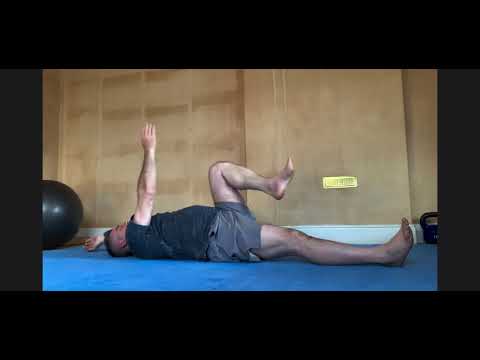
Brain injury movement rehabilitation

Progress doesn’t
have to stop.

Specifically designed for people whose movement has been compromised by brain injury, this structured 10-session group programme rebuilds the developmental foundations of human movement to support continued improvement in movement quality and function.

Starting as a research project, the programme was extended after demonstrating meaningful improvement in people whose rehabilitation had failed, ceased to be productive, or had been deemed to have achieved all that was possible.
Scientifically grounded in developmental patterns

The project is structured around developmental movement logic and was first presented as research at the World Congress of Neurorehabilitation.

Who it is for

For people working from severe movement deficits through to those who can walk, but feel their movement quality, control or confidence remain compromised.

If your movement changed after brain injury, this is for you.

The Movement Project is designed to meet people where they are. Some participants are rebuilding very early movement capacities. Others already walk independently but want to improve the quality, efficiency and confidence of that movement.

Whether your brain injury was recent or your movement was compromised many years ago, you are welcome to apply.

Rebuilding movement from the foundations

For participants with substantial movement compromise who need to work from an earlier point in the developmental sequence.

Improving movement that already exists

For participants who can stand, transfer or walk, but know their current movement still feels limited, compensated or below its potential.

Rebuild the foundations that more complex movement depends on.

Human movement develops in hierarchical sequence. The Movement Project uses that sequence to structure your rehabilitation, working through foundational movement patterns rather than treating walking as an isolated skill.

Rolling
Crawling
Kneeling
Squatting
Standing &
Walking
Ten progressive weekly sessions. Each session builds on the last, giving the programme a clear developmental logic while targeting gaps in an individual’s movement hierarchy.
Individual starting points The same principles can support someone working towards crawling, standing, walking or better-quality gait.
Movement for life outside the session The aim is not simply to perform drills, but to create changes that carry into everyday function and broaden people’s lives.

Experience raised the question.
The original project strengthened the case.

The Movement Project began when a stroke and brain surgery survivor questioned assumptions within most conventional rehabilitation programs that walking should be the immediate rehab strategy and that significant improvement is not possible once an individual is 3-6 months post injury.

From lived experience

The project’s origin lies in direct experience of movement compromise after brain injury and in questioning rehab strategies and the limitations placed on scope for recovery.

From research into practice

The original group was created as a research cohort. Participants who still had significant deficits but had completed their rehab progressed so well that stopping the work no longer made sense.

Now led with shared understanding

The Movement Project is led entirely by people directly involved in the original research, either its author or participants in the original programme. They bring in-depth knowledge of human movement as well as first-hand understanding of compromise following stroke and surgery.
Hear from people who have experienced the Movement Project.

Every participant starts from a different place. These stories will let you hear directly from people working at different stages of movement rehabilitation and find an experience that feels relevant to your own.

Working on rolling testimonial video thumbnail
▶
Working on rollingParticipant story
Gaining competency in Kneeling testimonial video thumbnail
▶
Gaining competency in KneelingParticipant story
Improving walking quality testimonial video thumbnail
▶
Improving walking qualityParticipant story
Working on walking testimonial video thumbnail
▶
Working on walkingParticipant story
Working on single leg transitions & balance testimonial video thumbnail
▶
Working on single leg transitions & balanceParticipant story
Amber's Movement Journey testimonial video thumbnail
▶
Amber's Movement JourneyParticipant Story
The Story of The Movement Project video thumbnail
▶
The Story of The Movement Project

Questions about the Movement Project.

Practical information about participation, safety, the application process and what to expect.

General Questions

Is the program free?

Yes. The program is offered free of charge and is sustained by voluntary donations from those who find value in the work. There is never any obligation or pressure to donate.

How long is the program?

Each series runs for 10 sessions. Routinely, the sessions are held weekly, however there may be occasional periods of 7 or 14 days without a session, mainly around public holidays. Sessions are 60 minutes long and held live over Zoom.

What are the five main movement categories?

The program follows a progressive sequence through five core categories: Rolling → Crawling → Kneeling → Squatting → Standing & Walking.

What happens after I am accepted?

You will receive clear instructions on session schedule, technology setup, required equipment, and weekly preparation. A separate “Once Accepted – What to Expect” guide will be provided.

How is my privacy protected?

Videos and personal information submitted in the application are used only for assessment and program placement. They are not shared outside the instructional team.

Why does the program ask for detailed written feedback and videos?

Written feedback and videos help the instructors understand how you move, what feels difficult, and what feels safe or unsafe and, importantly, how best to improve your movement. This information helps create a clearer picture of your needs. It is NOT used to determine whether or not you qualify for the program.

Who may benefit from participating?

The program may be helpful for anyone who has experienced movement deficits as a result of brain injury. The aim is to improve your movement quality, confidence, control, and functional movement. Restoring and improving foundational movement patterns will benefit everyone, from people who cannot crawl or stand up, to those who can already walk but are looking to improve.

What should I keep in mind before beginning?

The program is safety-focused. You should not attempt any movement that causes pain, feels unsafe, or creates a risk of falling or injury. Clear feedback about what you cannot do is just as important as showing what you can do.

What is the purpose of the Movement Project Application?

The application helps the instructors understand your brain injury history, previous movement or fitness background, current movement quality, rehabilitation experience, daily routine, and how you currently manage a series of basic movement tasks. This application also serves as a movement assessment to better help you later in the program.

What information will I be asked to provide?

You will be asked for your name, age, email address, details of your brain injury, your pre-injury movement or fitness background, your job or daily routine, your current movement quality, and any rehabilitation you have received or continue to receive.

Do I need to be able to perform all of the movements to register?

No. The assessments are intended to identify what is currently within your ability and what is not. Not attempting a movement because it feels unsafe, painful, or risky is valuable information and will not negatively affect your registration. The quality of your movement in the completed assessments will have zero impact on your eligibility to join the program.

Can I get help completing the questionnaire, recording videos, or understanding the instructions?

Yes. You may have assistance from a trusted person if needed. Do not attempt any movement you cannot safely perform on your own. The assessment is simply meant to show where you currently are in your movement so we can place you appropriately in the program.

Who can I contact with questions before I submit, while I’m deciding, or after I’ve been accepted?

Please email Info@MovementProject.Rehab for all program enquiries. Use that address for any questions about the process, the 10-week sessions, or participation.

Safety and Participation

Should I attempt a movement if I feel pain or think I might get hurt?

No. Do not perform any movement if you feel pain, anticipate pain, feel unsteady, or believe there is any risk of accident or injury. Instead, explain why you did not attempt it in the questionnaire.

What should I do if I am unsure whether a movement is safe for me?

If you are unsure, do not attempt the movement. Safety comes first. Use the written response area to explain your concern, such as pain, balance issues, fatigue, lack of confidence, or risk of falling.

What should I do if my symptoms get worse during or after an assessment or while participating?

If you feel this is a medical emergency, call 911 (or your local emergency number) right away, or contact the specialist who handles your care.

Will I be judged on how well I can move?

No. The quality and honesty of your feedback are more important than the current quality of your movement. The goal is to understand your present movement ability so the instructors can identify the most appropriate support or intervention.

How should I prepare my space before attempting the movements?

Choose a clear, quiet area with enough floor space to move safely. Remove loose rugs, cords, furniture, pets, or other obstacles that could cause you to trip or lose balance. Make sure the floor surface is stable and not slippery. Any room in your house is fine as long as there is enough floor space to move safely.

Should someone be nearby while I complete the assessments?

If you have balance concerns, fatigue, dizziness, a history of falls, or uncertainty about getting up and down from the floor, consider having another person nearby for safety. They should not assist with the movement unless you need help to prevent a fall or injury.

When should I stop an assessment?

Stop immediately if you feel pain, dizziness, shortness of breath beyond what is normal for you, sudden weakness, numbness, confusion, nausea, loss of balance, or any feeling that you may fall or injure yourself. It is okay to stop and explain what happened in your written response.

What if I feel tired partway through?

Pause, rest, and only continue if you feel fully safe and ready. Fatigue is important feedback. If tiredness affects your movement, balance, confidence, or ability to continue, note this in the application. Remember: the complete application can be completed over multiple visits. Come back and complete it when your energy levels are higher.

Should I complete the application if my symptoms are worse than usual?

If your symptoms are unusually worse, consider waiting until you are back to your typical baseline. If you do complete any part of the questionnaire while symptoms are elevated, explain this clearly so the instructors can better understand your situation.

Can I use furniture, a wall, or another support for balance?

Use support if you need it to stay safe, but describe exactly what support you used and why. If a movement cannot be attempted safely without support, it is better to stop and explain that than to risk injury.

How can I record videos safely?

Set up the camera before you begin, and do not hold the camera while moving. Place it on a stable surface where it can capture your full body without requiring you to step over equipment or move around obstacles. A full guide will be provided in the application.

Video and Space Requirements

Do I need to submit videos with the questionnaire?

Yes. In addition to your written responses, you must include a video of your attempts at each required movement. For movements that involve the left and right sides, provide one video for each side where applicable.

What should the videos show?

Your videos should clearly show your movement attempt from start to finish. Make sure your body is visible enough for the Movement Project/something is needed to see how you move, where you have trouble, and whether the movement appears safe or limited.

What kind of space do I need?

You need enough clear floor space to safely carry out and demonstrate the movements. Remove obstacles, make sure the floor surface is suitable, and only continue if you feel secure and confident. Most people use an open area in their living room. Use a yoga mat or carpet if the floor is hard. A large yoga mat (5’ x 7') if needed can be found here.

What kind of camera setup do I need, and video conferencing software?

A smartphone or Laptop with webcam will be needed, the Zoom app should be downloaded (free) here, with a profile setup. The camera will need to positioned so your movements can be seen clearly when recording videos or participating in a video call. If possible, test the camera angle before beginning.

Completing the Movement Sections

How should I answer each movement assessment?

For each movement, choose the response that best describes your experience: you could not attempt it or felt pain; you could achieve parts of it; you could perform it but not exactly as desired; or you could achieve it as described. Then add written details explaining what happened.

What should I write in the explanatory text area?

Describe what you experienced during the movement. Helpful details include what felt difficult, whether you had pain or discomfort, whether one side felt different from the other, whether you needed support, how confident you felt, and whether the movement caused fatigue, imbalance, or hesitation.

What if I can do part of a movement but not all of it?

That is useful information. Indicate that you could achieve parts of the movement and explain which parts were possible, which parts were difficult, and why you stopped or modified the movement.

What if my left and right sides feel different?

Note the difference clearly. Several assessments ask for separate feedback for the left and right side, arm, leg, or movement direction. Differences between sides can help the instructors understand your movement needs.

Specific Assessment Questions

Why are some assessments marked with extra safety notes?

Some movements, such as getting up from the floor or moving from kneeling to standing, may require more balance, strength, and confidence. Only attempt these if it is safe and you feel confident doing so.

Do I need to follow the movement descriptions exactly?

Use the descriptions and linked demonstration videos as guidance, but do not force a movement beyond your ability. If you cannot complete the movement exactly as described, explain what changed and why.

Submitting a Strong Application

What makes a strong application?

Providing detailed strong responses that are honest, specific, and safety-focused. It explains what you attempted, what you noticed, what was challenging, what felt comfortable or uncomfortable, and why you did or did not continue.

Can I include extra context about my injury, rehabilitation, or daily routine?

Yes. Additional context can be helpful, especially if it explains how your injury affects your movement, energy, balance, confidence, work, daily activities, or ongoing rehabilitation.

What should I do before submitting?

Review your written answers and videos to make sure they are complete, clear, and accurate. Confirm that you have included videos for each required movement, including both sides where requested, and that you have explained any movement you did not attempt.

Apply for the next Movement Project

Applications are now open. Places are limited to 8 participants. Applications must be received by 20th September 2026.

Tell us about your brain injury, your current movement and what you would like to work towards. Registrations are reviewed in the order they are received, and each Movement Project is limited to 8 participants.

If the next project is full, suitable applicants will be placed on the waiting list and given priority consideration for a subsequent Movement Project.

Apply for the next Movement Project